
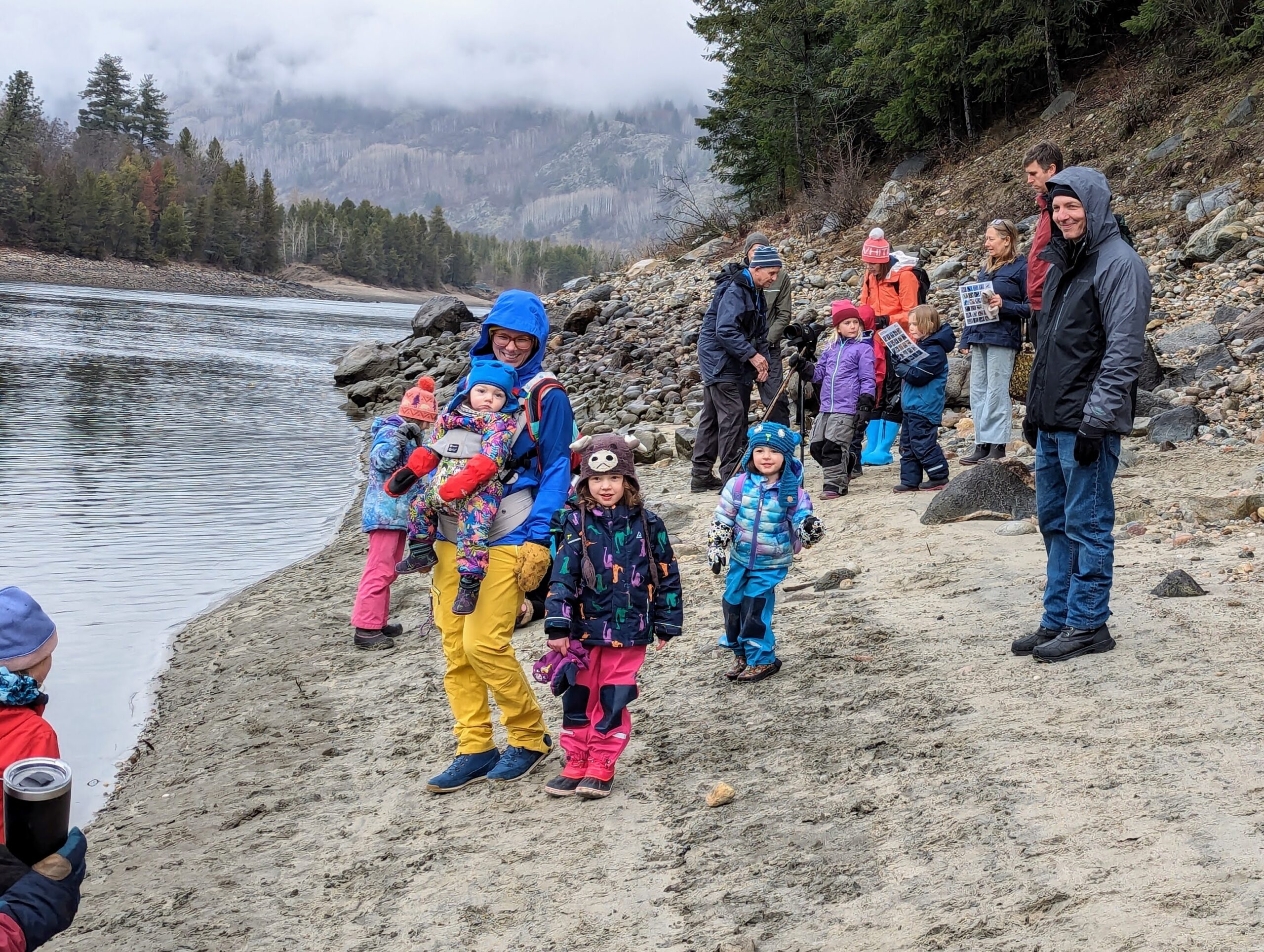
On February 4, 2024, the Nelson NatureKids club partnered with the West Kootenay Naturalists Association for a birding adventure along the Selkirk College Castlegar trails. This area is renowned for its exceptional bird-watching opportunities, making it a prime location for enthusiasts to encounter a variety of unique bird species.

With guidance from the birding experts of the West Kootenay Naturalists Association, NatureKids spent the afternoon exploring along Castlegar’s river banks hoping for some lucky encounters.
There are many spectacular species found in the area such as the bald eagle, red-tailed hawk, American goldfinch, northern pygmy owl, and pileated woodpecker. These are just a few of the over 200 documented bird species in the area!
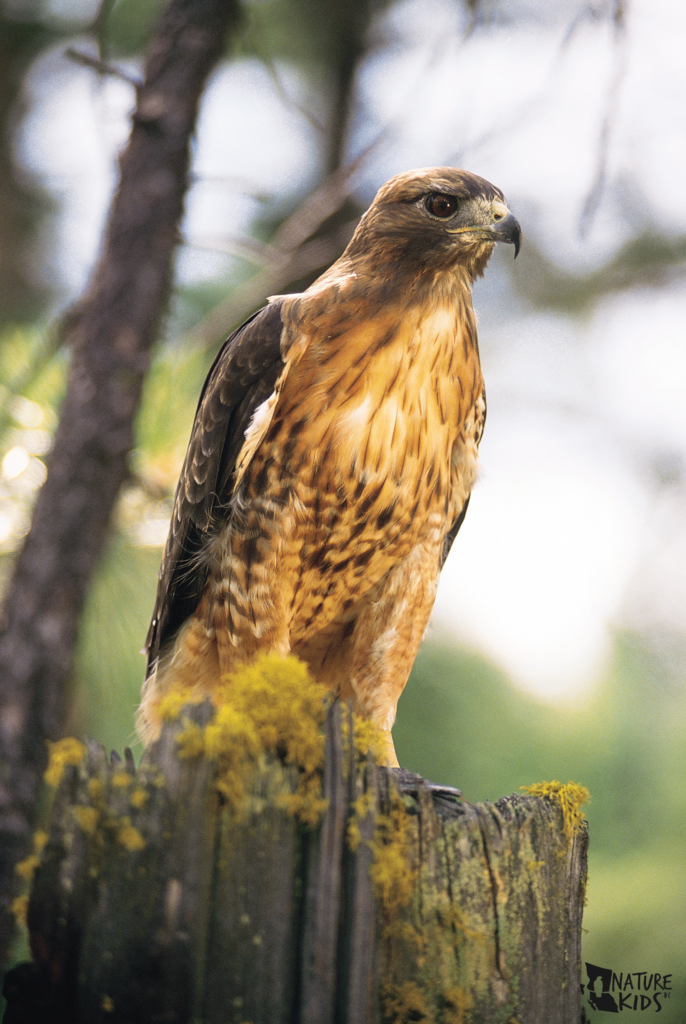
According to the birding app eBird, Castlegar boasts the second-highest number of bird species spotted in British Columbia, after Osoyoos. This diversity can be attributed to the region’s distinct geography and climate. From forested areas to wetlands, Castlegar offers a range of habitats that support bird populations year-round.
Biogeoclimate and Wildlife
Located in the southeastern interior mountains of British Columbia, this eco-division features a unique temperate biogeoclimatic zone known as the Interior Mountain-heather Alpine (IMA) region. It is characterized by relatively humid-warm summers and cool winters (compared to surrounding regions such as the Okanagan), creating ideal conditions for larger wildlife diversity and a thriving bird population. Birding is an accessible hobby in any season here!
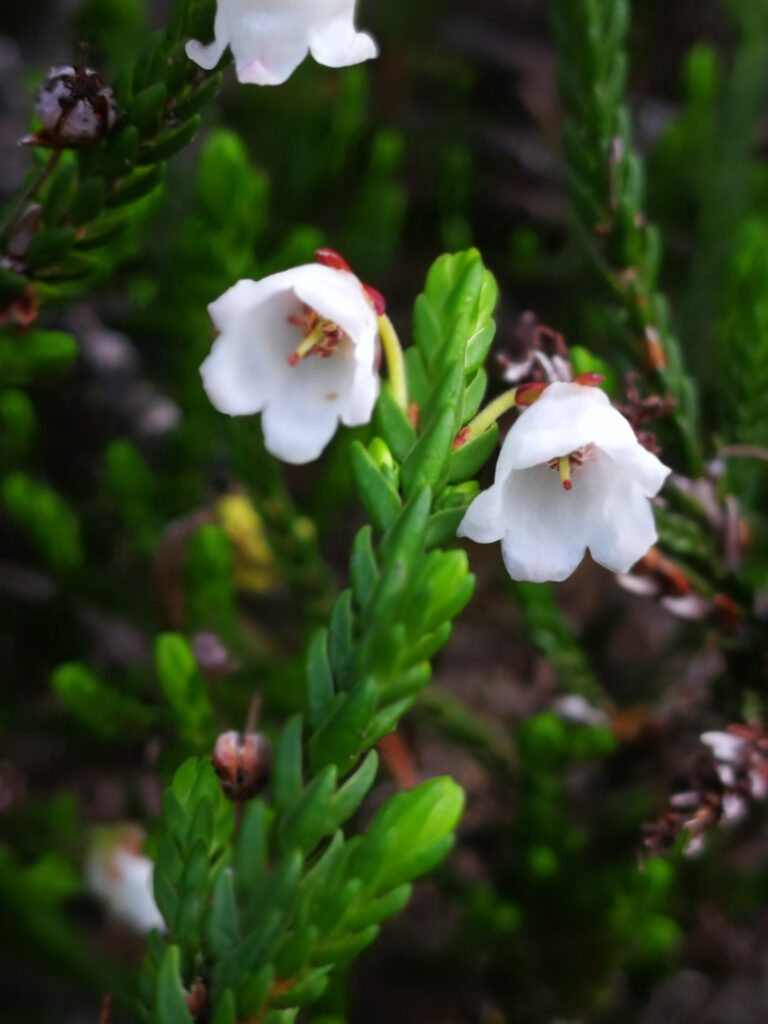
In summer, you might also encounter the unique regional BC native species known as mountain-heathers. This low-lying shrub has evergreen leaves and brilliant bell-shaped blooms ranging from white to magenta. The slow-growing species produces a vibrant golden-brown dye and was historically used by the Nlaka’pamux (Thompson) First Nations to treat tuberculosis.
What an exceptional flower!
Interestingly, Castlegar’s unique location is also at the convergence of the Kootenay and Columbia rivers which contributes largely to its rich biodiversity. These waterways create an extensive migratory path, acting as a natural wildlife corridor and allowing a vast network of species and birds to migrate throughout the area.
Moreover, local forests play a significant role in providing habitats for birdwatching. In the Castlegar region, hemlocks are prominent and part of the Interior Cedar-Hemlock (ICH) zone. Typically, these species are found at lower to middle elevations within the interior wet belt known as the Rocky Mountain Trench.
Be sure to keep an eye out the next time you go bird watching, you may find many bird species are habitat-dependent on the characteristic tree species in your area. In the ICH zone, you can find species such as the western hemlock and western redcedar, which local birds like chickadees and goldfinches tend to favour.
What a fantastic opportunity it was for the young explorers to learn more about regional birds and their important habitats!

Happy birding!
Thank you to the West Kootenay Naturalists Association and all our outstanding volunteers for making this wonderful birding event possible!
Experience Explorer Days with your family, learn about nature and receive a free subscription to NatureWILD.
Want to learn more? Check out this link to learn more about Castlegar’s winter birding season: https://www.destinationcastlegar.com/out-about/winter-birdwatching-in-castlegar/
Written By Jenna Northmore, NatureKids communications & research assistant co-op student. Jenna is currently studying Earth & Environmental science at UBC Okanagan.