
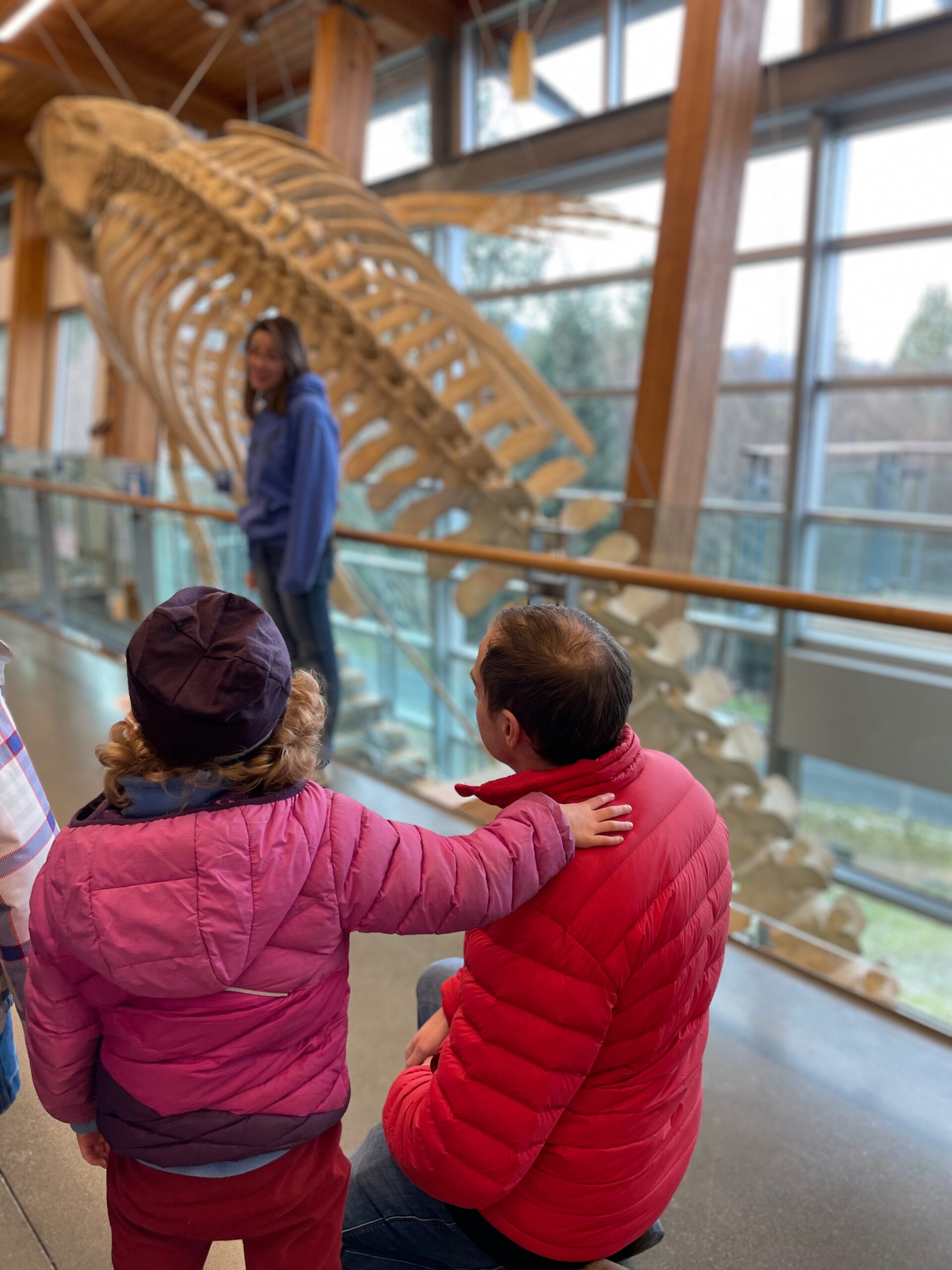
On February 4th, the Nanaimo NatureKids Club embarked on an exciting adventure into the depths of Vancouver Island University’s Deep Bay Marine Station!
The facility is dedicated to providing an environment for community engagement, education and research opportunities for visitors. Guests can enjoy regular admission and guided tours from May 18th to September 2nd this season.
Specializing in sustainable practices, the Deep Bay Marine Station supports shellfish aquaculture and the health of coastal ecosystems.
Read more to learn about the wonders of marine life here and the importance of sustainability in our coastal communities!
Dive Deep Into the Facility
Whether you are new here or just interested in learning more about local coastal species, there’s something for everyone to discover here!
Accompanied by club leader Alyssa Bougie, the tour guided NatureKids through wet and dry laboratories full of analytic systems, marine vessels and equipment used for research.
The Deep Bay Station boasts award-winning designs for its repurposed recycled materials used in constructing the facility. Wood floor panels laid inside are made from trees harvested from pine beetle-decimated forests across British Columbia. Additionally, the topsoil is created from recycled construction wood waste, ground into organic topsoil for native plants, from the thoughtful work of Nanaimo landscape architect Victoria Drakeford.
Even the roadways showcase sustainable practices, featuring a layer of permeable, crushed oyster shells to reduce rainwater runoff. These approaches demonstrate an outstanding commitment to innovative eco-friendly practices, earning the facility a Leadership in Energy and Environmental Design (LEED®) Platinum rating.
Learn Everything About Shellfish
There’s lots for the NatureKids to explore here with 11 ha. full of marine wildlife and shellfish collected throughout intertidal and deep water leases. NatureKids learned more about the interworkings within the aquaria and how they control their cultivation processes within aquatic organisms. They even had a special opportunity to engage in hands-on activities in the touch tank area!
The NatureKids’ curiosity remained strong throughout their exciting aquatic adventure, providing plenty of opportunities to ask questions and learn from marine experts.
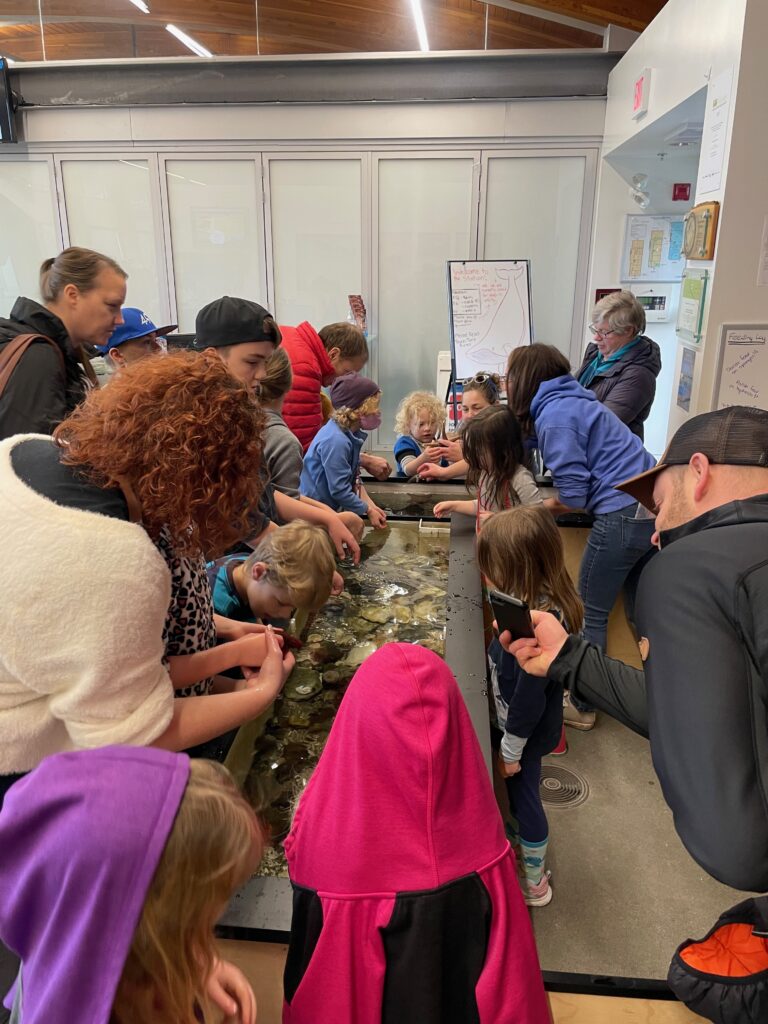
With the help of a knowledgeable facility guide, they carefully handled some of the fascinating invertebrates; including sea stars, sea cucumbers, sea urchins, and anemones.
Fun fact: Shellfish are important in sustaining healthy water quality by removing harmful levels of algae blooms like red tide algae!
The Great Gray Whale
Shellfish aren’t the only fascinating things to explore here. Come and see the massive grey whale skeleton on display! This extraordinary marine animal’s remains arrived as part of a monumental community project in April 2010. Initially, the whale was discovered by Sharon Cooper of Scia’new First Nation. She helped recruit over 160 committed volunteers and donors from East Sooke Park to gather and preserve this piece of history. Through great community effort, the gray whale stands safely preserved at the exhibit with a remarkable 20-plus tons and 10 meters of glory.
Now, you can marvel at its magnificent stature—145 bones assembled for study and display at the Field Station exhibit. Don’t miss the chance to witness this incredible piece of marine history!
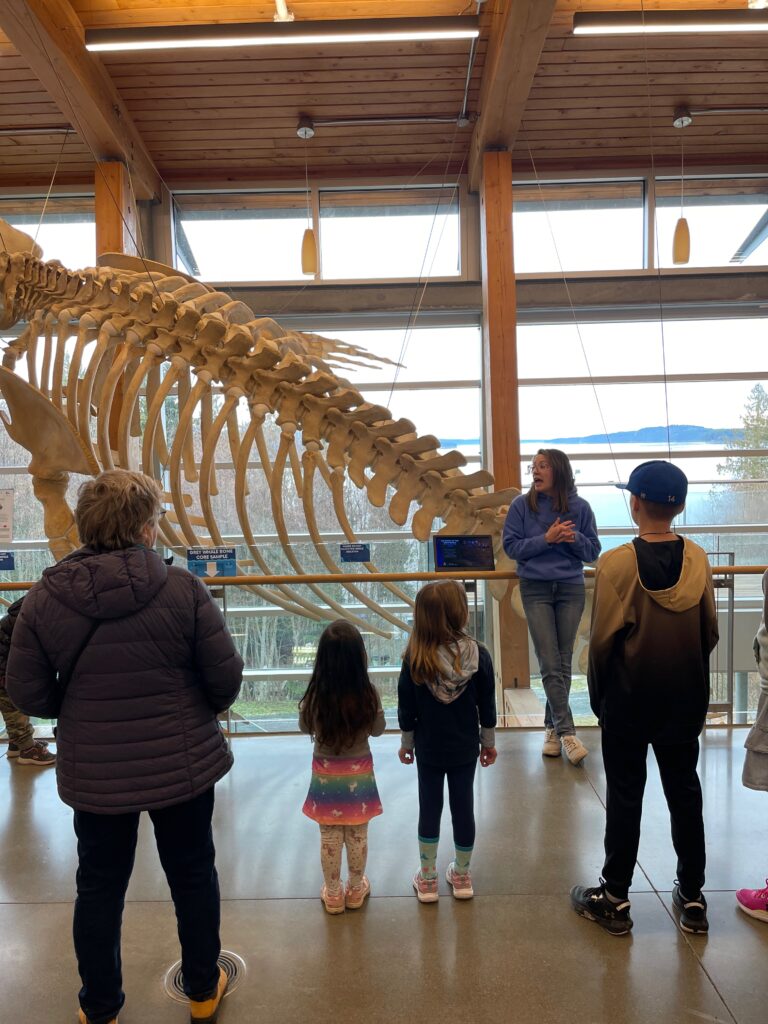
From sea creatures, colossal whale skeletons, and the inner workings of laboratories, I would say the NatureKids of Naimaino were in for a marine-filled blast on this Explorer Day!
Thank you to all our club volunteers and our Deep Bay Marine Station guides for putting together this fantastic experience.
Have an idea of where you want to see the NatureKids go next? Let us know in the comments!
Become a Member Today!
Experience Explorer Days with your family, learn about nature and receive a free subscription to NatureWILD.
Written By Jenna Northmore, NatureKids Communications & Research Assistant Co-op Student. Jenna is currently studying Earth & Environmental Science at UBC Okanagan.