
This article originally appeared in the special SalmonWILD issue of NatureWILD Magazine in 2021.
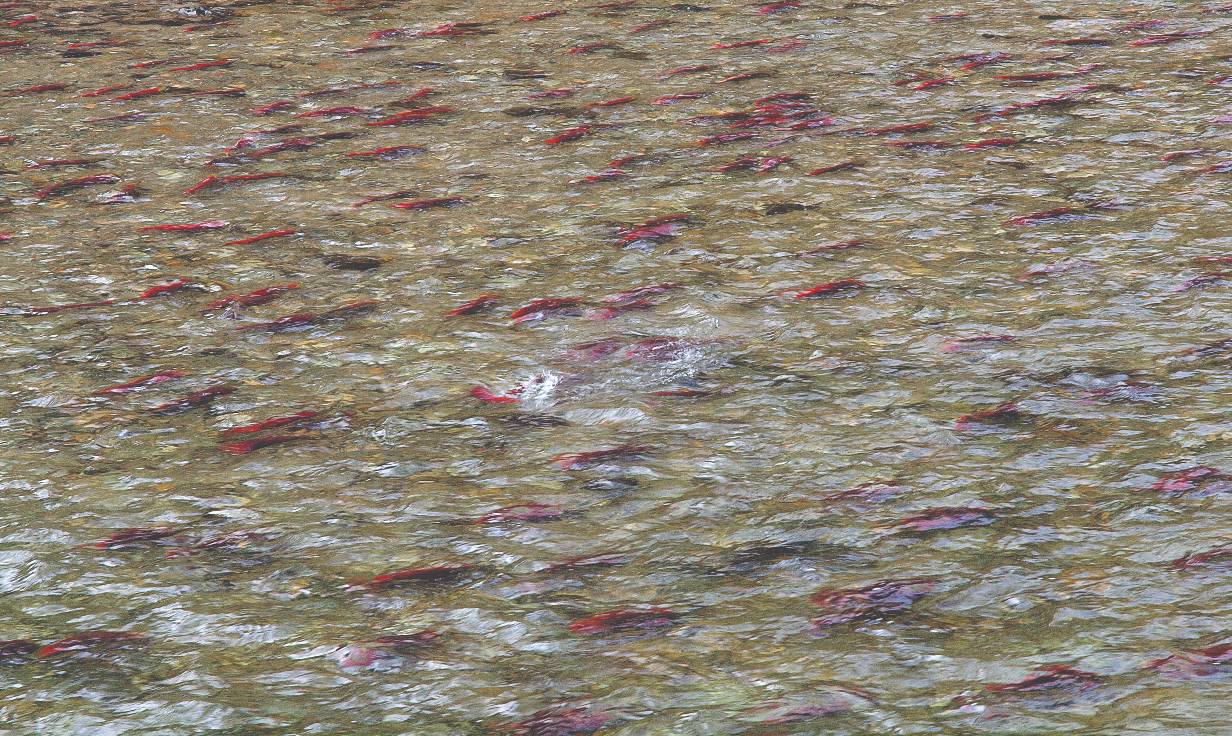
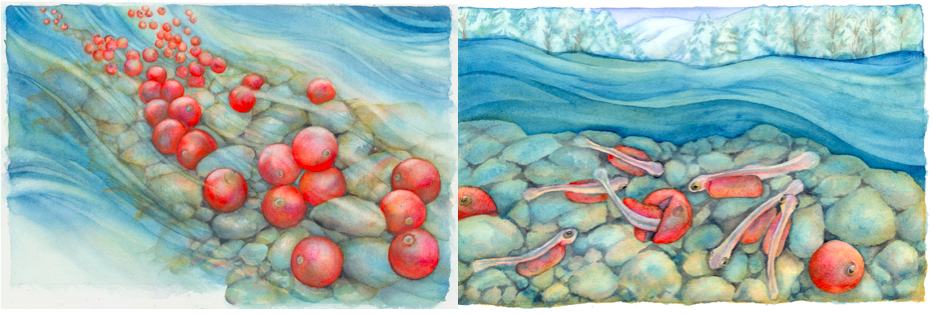
For hundreds of years, the life of Pacific salmon and their migrations have been a mystery. Salmon hatch from eggs laid in the gravel of freshwater streams, grow into little fish, go down the rivers, out into the ocean and — apparently — vanish.
Years later they reappear as full-grown adults and swim back up to the very stream where they first hatched out. The adult salmon spawn and die and the whole mysterious cycle begins again. But the real mystery is how salmon know to return to the exact stream where they were born (their “home” stream).
When the little salmon swim down the river and into the ocean, they do not hang around near
the river mouth but migrate northward along the British Columbian and Alaskan coast and out into the north Pacific Ocean. Then, for a year or more they swim for thousands of kilometres as they search for food until they are ready to come back to their home stream to spawn and begin the cycle all over again.
But where do the salmon go when they travel for years through the vast waters of the Pacific
Ocean? And just HOW do they find their home again? These are mysteries that scientists have
studied for years.
There are seven species of migratory Pacific salmon (Sockeye, Pink, Chum, Coho, Chinook, Steelhead trout, and Cutthroat trout) living in British Columbia waters. All of them follow similar life cycles, but each is a little different. Pink salmon are the smallest and most abundant, and every Pink salmon only lives two years. Chinook salmon are the least abundant but are the largest, sometimes weighing over 50 kilograms! But the most important salmon to the people of British Columbia has been the sockeye salmon, especially from our largest river, the Fraser River.
Fraser River sockeye almost always live for four years, so let’s follow the adventures of a Fraser River sockeye that will return this year, 2021.
These sockeye hatched from eggs that were laid in the fall of 2017. After hatching in early spring 2018 the juveniles spent a year in their nursery lakes until the spring of 2019, when they travelled down the Fraser River into the ocean.
Before starting their long trip (migration), each little salmon has to get ready. The little salmon
uses water temperature and hours of daylight to trigger when it changes its behaviour, its
appearance, how its body works. At last, it is ready to stop being a freshwater fish and become
a saltwater fish. Then, one day the whole sockeye population moves off together, leaving their nursery lakes and travelling down the streams and rivers to their date with the ocean.
After they entered the ocean in 2019, the sockeye swam a thousand kilometres north to their
ocean feeding grounds (map). Salmon prefer to stay in colder waters between 10-14°C in
summer and only 8-12°C in winter. As the temperatures changed between seasons, the
young salmon migrated through the Pacific Ocean where they feasted on zooplankton, squid, and
sometimes on small fish. After feeding and swimming through 2019, in 2020 they circled those distances all over again to continue to grow.
In summer 2021, after two years at sea, the now-adult sockeye will migrate back to the British
Columbia coast and back to their home river. That’s approximately 3,000 to 5,000 kilometres of
swimming in the ocean! Then they may still have to travel several hundred kilometres upriver to
get back home.

Of course, the ocean is a dangerous place for a small salmon — salmon are prey for many other
animals such as birds and other fishes, as well as orcas and sea lions that depend upon salmon for a large part of their diet. As they migrate home, many are caught by fishers. Others perish on the way back up the river because in some places the water is too warm or the channel is blocked by a rockfall. Of all the millions of salmon that go out, only about eight per cent will return. That means that for every million young salmon that head out to the ocean, only about 80,000 will return. Years ago, the return numbers were higher. It’s a tough life being a salmon!
So how DO the Fraser River sockeye find their way on their long, long journey back home to
where they were born? This is what we know so far — or think we know:
1: The direction that salmon fry and smolts need to take through their nursery lake to the river outlet and down to the sea is fixed in their genes. No matter which part of the lake they live in, the fish know which way they need to swim to exit the lake.
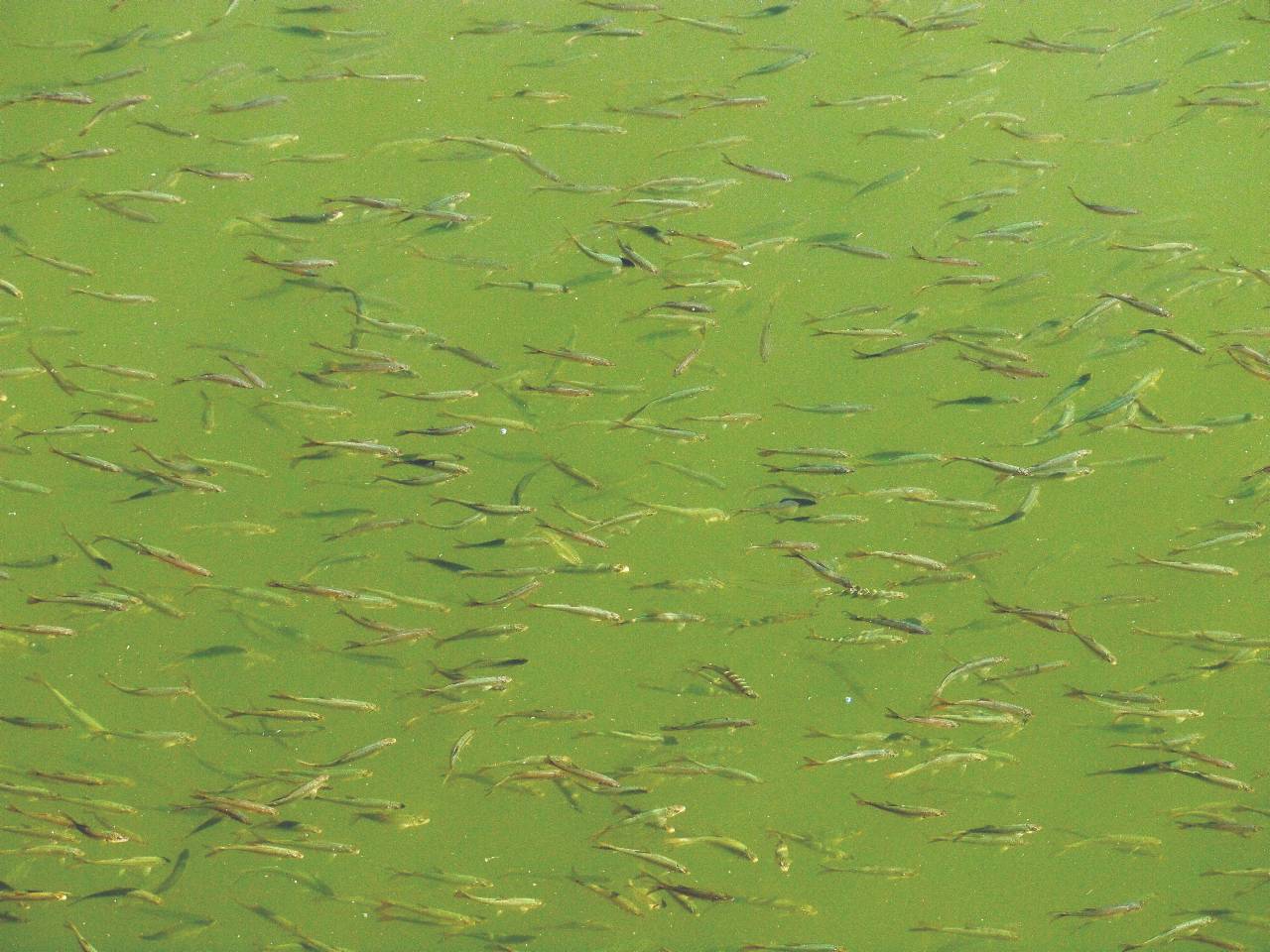
2: To find their way out of the lake and down to the sea, the young sockeye can use the position of the sun in the sky or the earth’s magnetic field for direction finding. So they have two compasses, a sun compass and a magnetic compass, to guide them during their migrations. As they swim out to sea, they learn the places they move through and form some kind of map in their brain, so that they can find their home stream again when they return to spawn. This ability of salmon to find home again is called navigation and we do not really know how they can do it so well.
3: To be able to use the sun for orientation, salmon must have a biological clock to determine the time of day. This clock helps them to change the angle with the sun as it moves through the sky (15o per hour) so as to maintain a constant migration direction.
4: Once the sockeye salmon have returned to the river and become freshwater fish again, they can use their super-sensitive sense of smell to track the water of their birth stream and follow it back to where they were born.
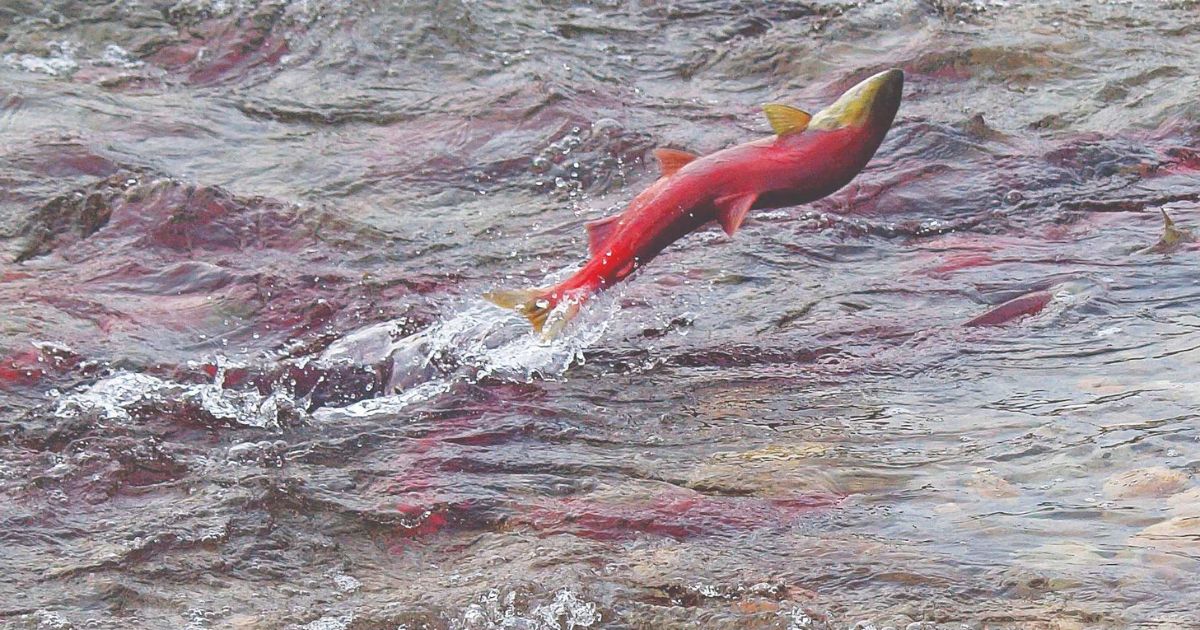
As to WHY the salmon return to their natal (birth) streams, maybe only the salmon know for sure. However, a likely reason is that they know it was a good place to grow up themselves, so it will probably be a good place for their babies to grow up as well.
So now you know almost as much about salmon migration as the scientists do! Perhaps when you grow up you will discover some more salmon secrets.
Dive into our Salmon Toolkit, with a sample Explorer Day template and “how-to” descriptions for various demonstration tools!
You can also download the Species Identification Cards (with marine and freshwater stages) from Fisheries and Oceans Canada, and learn the salmon life cycle with our Flash Cards.
Get involved by checking out these links to local Salmon viewing, hatcheries, and conservation groups.
The information upon which this article is based was kindly provided by Dr. Kees Groot, fish behaviourist with Fisheries and Oceans Canada, and Dr. Brian Riddell, Chief Science Advisor, Pacific Salmon Foundation.