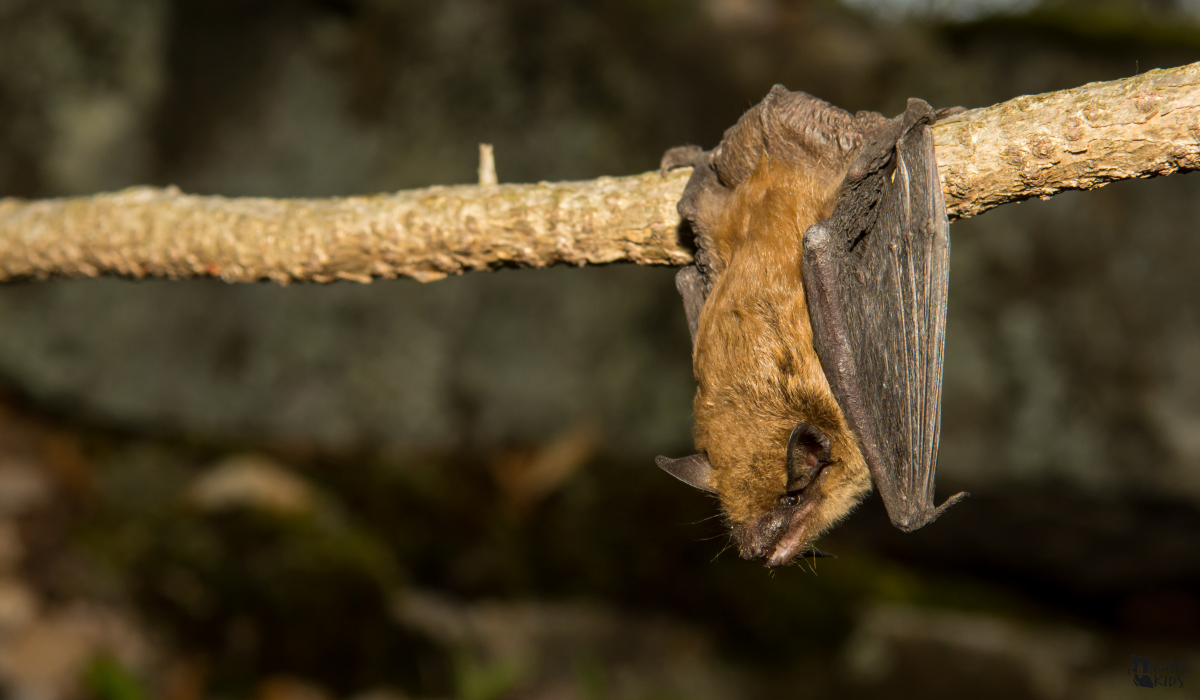
Bats are important. Come nightfall, these important predators wake up and take flight. Bats hunt insects that are agricultural pests, pollinate flowers, and spread seeds that grow new plants and trees. The organic pest control that bats provide is estimated to be worth billions of dollars annually to the North American economy. They also eat bugs that can annoy us humans (for example, a little brown myotis can eat up to 600 mosquitos in an hour!) – thanks bats!
There are at least 15 species of bats in BC. Many of them are among the most common wildlife in our communities, but being nocturnal and secretive, they are hardly ever seen. Unfortunately, bats are in trouble. Most bats give birth to just one pup per year, and only about half of those young make it through their first winter. This low reproductive and survival rate means that bats are especially vulnerable to habitat loss, cat predation, collisions with wind turbines and vehicles, and entrapment and extermination. Most recently, white-nose syndrome; a fungal disease initially introduced to North America has been killing millions of bats in eastern North America. Scientists are on the lookout for this disease in BC.
Due to these threats, many bat species are being closely monitored in order to help set conservation priorities. The pallid bat (Antronzus pallidus) for example is currently listed as an “endangered species” in BC (Red listed; at risk of being lost). Little brown myotis (Myotis lucifugus) has recently been put on the Blue list (species of special concern), joining the Northern myotis (Myotis septentrionalis) and the spotted bat (Euderma maculatum) (both also Blue listed). This is why we need to do our part and join in the efforts to protect bats in BC. Check out our 4 different Explorer Days to learn more and help!
Get Involved
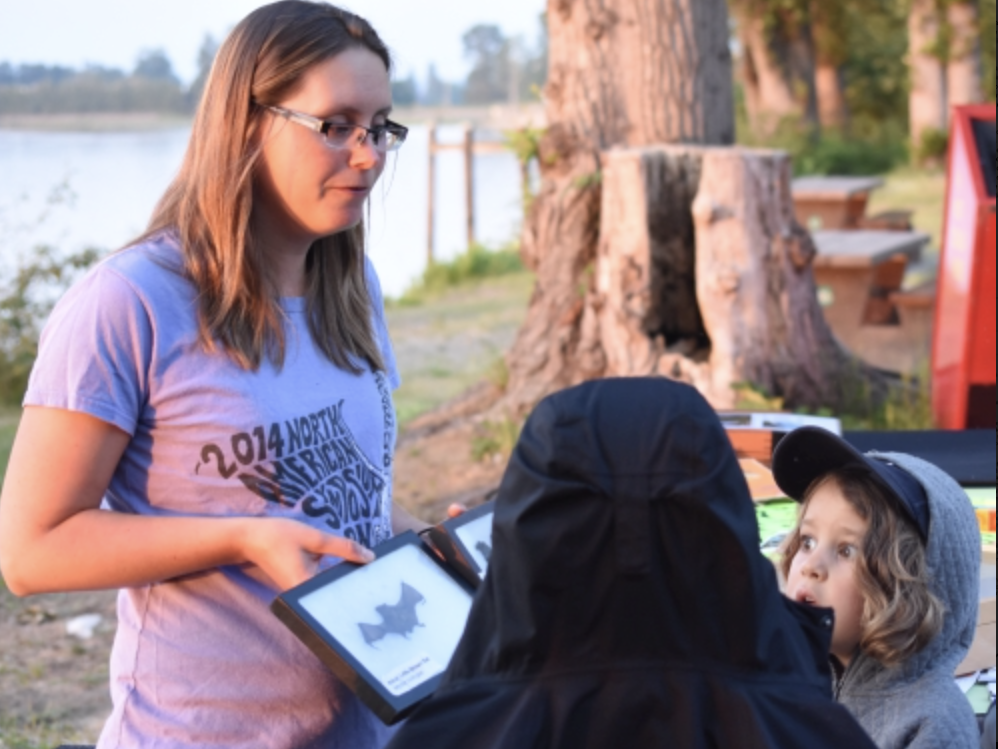
Citizen science is a great hands-on learning tool to get children and youth involved in real science. In June, July and August, youth can get involved with evening bat counts and submit data that will help scientists monitor bat populations. Youth also learn new things about the nocturnal world around them. At other times of the year, youth can be involved with a stewardship component by learning how to improve important bat habitats. Youth can also be empowered to help bats by raising awareness and telling others about the importance of bats.
Resources
Using our bat materials we invite families, clubs, and schools to learn about and get involved with bat citizen science through four different bat-themed Explorer Days:
Be a Bat Buddy – Meet our local BC bats through multiple fun and informative activities (includes over 2 hours worth of things to do!)
Be a Bat Detective – Do an actual bat count! For this, you will also need a Bat count data sheet and Bat ID card.
Be a Bat Bestie – Build a Bat Home.
Be a Bat Champion – Help raise awareness about bats, the more people know, the better.
These Explorer Day activities can be done individually or in combination. They can be done with your family, your class, your friends and more. We also have a general Introduction to bat citizen science for any day or activity. Additionally, check out our old NatureWILD magazines highlighting bats.
NatureKids BC will be running Bat Explorer Days through our family clubs across BC (check upcoming events – link), but you are also welcome to create your own event with your friends, family, or class.
We welcome questions and suggestions for improving this program. Please contact us at info@naturekidsbc.ca. We’d also love to hear about your experience with this bat citizen science program on social media – please tag us! Click here to follow us on Facebook or Twitter.
We are very grateful to our supporters: