
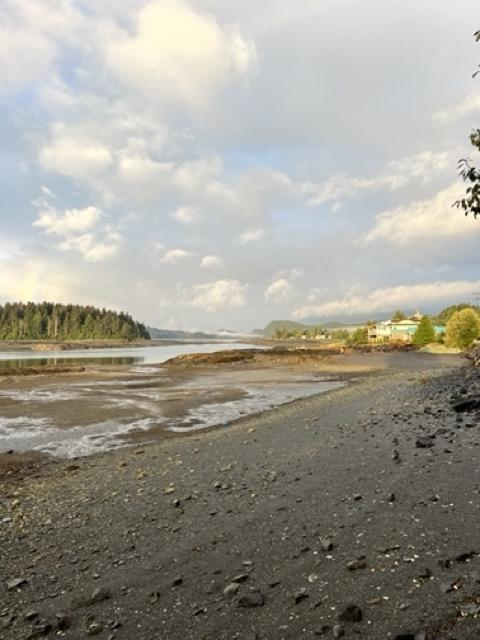
From the depths of the ocean to the heights of the sky Haida Gwaii is a diverse place filled with natural beauty. It is an isolated archipelago 100 km west of mainland British Columbia, and is known for its rich biodiversity. Furthermore, Haida Gwaii is located on the traditional territory of the Haida Nation. Around 5,000 people call these islands home, and the diverse ecosystems, from bogs to beaches, are what I found most intriguing.
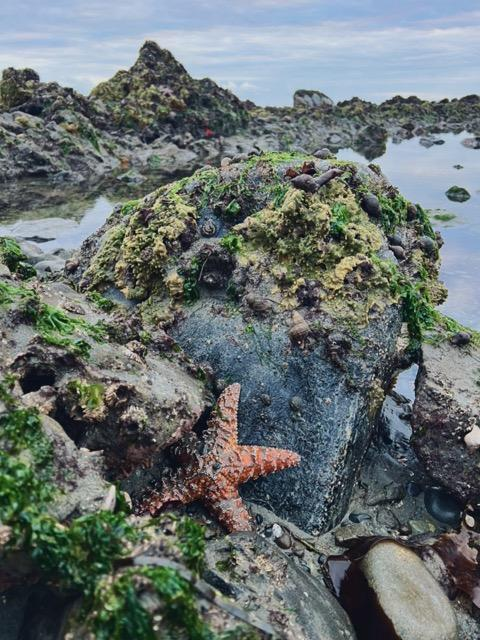
Haida Gwaii’s coastline is stunning, with diverse beaches that vary from smooth cobble shores to rugged rocky landscapes. The ochre sea star is a captivating marine creature, known for its vibrant appearance and unique attributes. When you turn one over, you’ll discover its incredible underside, covered in hundreds of tiny tube feet with delicate tentacles and suckers. These sea stars come in various colors, adding to their charm. What makes them even more fascinating is their role as natural indicators of water health. More ochre sea stars mean healthier waters in the ecosystem.
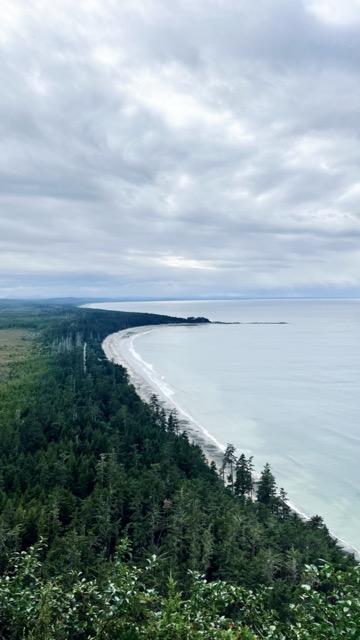
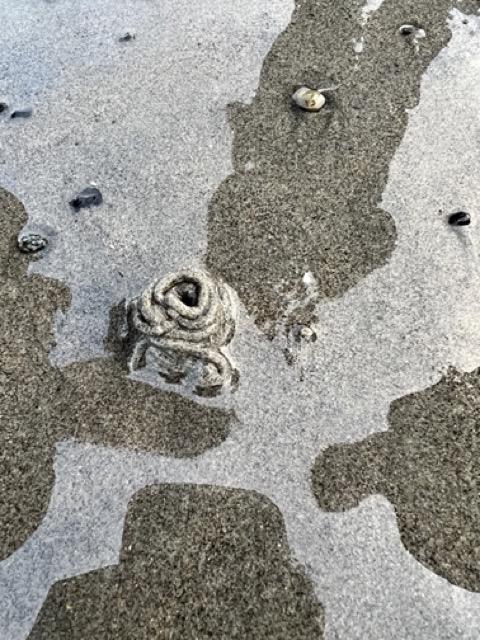
North Beach is a sandy beach. Above is a photo from the viewpoint of Tow Hill. Here you can see the waves crashing along the shore. The view is of North Beach. While walking along the beach, I stumbled upon something intriguing. I noticed peculiar formations that looked like piles of sand, swirled up into cone-like shapes. My curiosity got the better of me, and I couldn’t help but wonder what these mysterious formations were and what creatures might be responsible for them. After some online research and a bit of detective work, it seemed that these intriguing sand formations might be the work of lugworms!
I was lucky to catch the migration of Sandhill Cranes. These birds, with their distinctive calls that can be heard as they fly overhead. Haida Gwaii and the neighboring mainland areas are prime breeding grounds for the Sandhill Cranes.

Amidst the beaches, you’ll also find bogs with stunted shrubs like cedars, hemlocks, and shore pines. Haida Gwaii’s abundant annual precipitation of 4 meters nurtures thriving bogs. These unique ecosystems are brimming with diverse plant species, such as Labrador tea, sphagnum mosses, and bog cranberry.
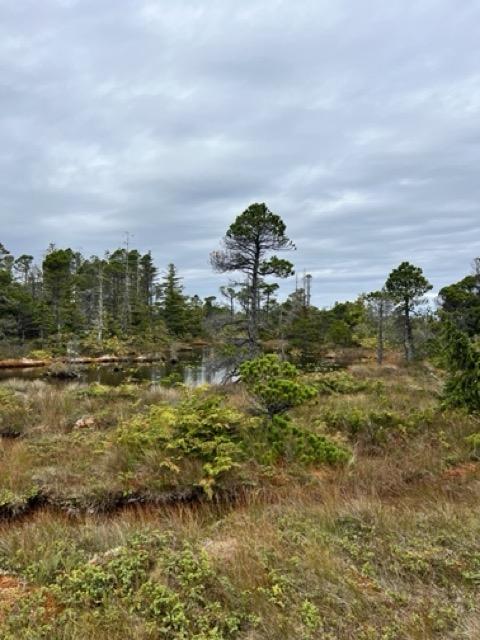
Everywhere you look in Haida Gwaii, from the deep sea to the high sky, you’ll find amazing creatures and beautiful places. This special group of islands is like a big puzzle of nature, where animals and plants all fit together in a fantastic way. The opportunity to explore this land has inspired a deep sense of responsibility and a strong desire to preserve. Haida Gwaii’s abundant biodiversity serves as a powerful reminder of the importance of conservation, inspiring us people to not only safeguard this environment but also promote for similar harmony in other places.
Sources:
BC Breeding Bird Atlas. www.birdatlas.bc.ca/accounts/speciesaccount.jsp?lang=en&sp=SACR. Accessed 31 Oct. 2023.
“Lugworm | Polychaete Genus.” Encyclopedia Britannica, www.britannica.com/animal/lugworm.
Magazine, Hakai. “The Secret World of Bog.” Hakai Magazine, hakaimagazine.com/videos-visuals/secret-world-bog/. Accessed 31 Oct. 2023.
“Purple, Brown, Orange and Red: The Multi-Coloured Mystery of Ochre Sea Stars.” Crosscurrents Kayak, 1 Apr. 2023, crosscurrentskayak.ca/2023/03/31/purple-brown-orange-and-red-the-multi-coloured-mystery-of-ochre-sea-stars/. Accessed 31 Oct. 2023.