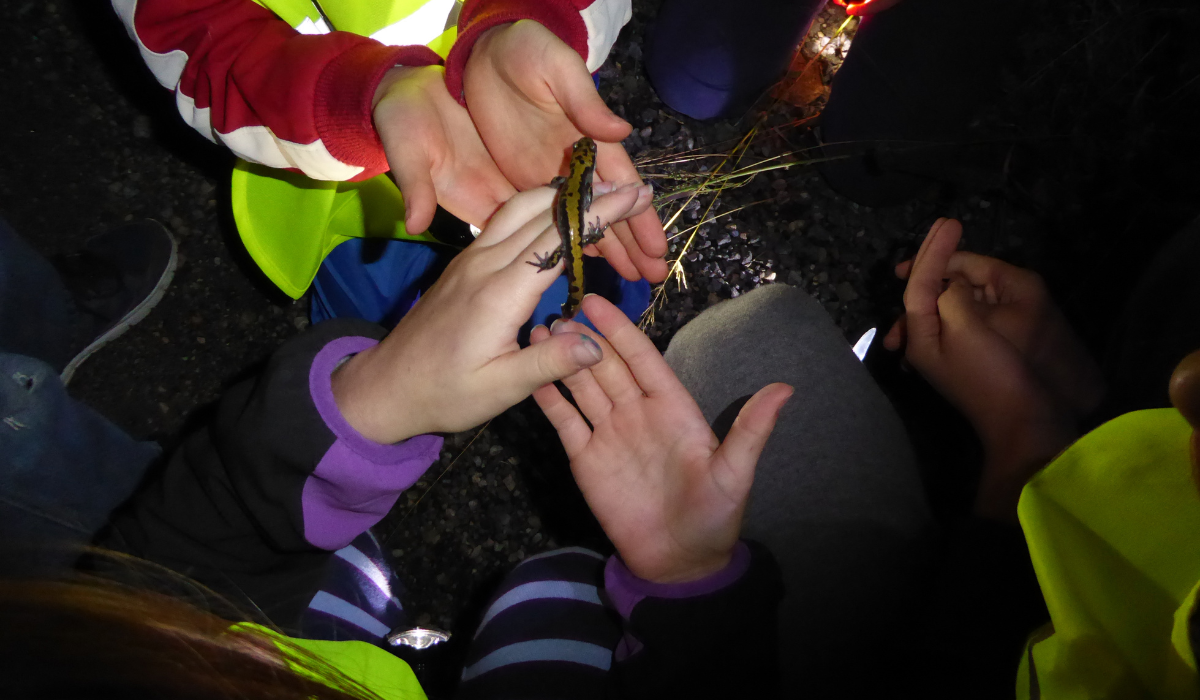
Discover what makes an amphibian! Most amphibians share four traits: smooth, moist skin; being cold-blooded; hibernating in winter; and living both in water and on land due to their metamorphosis. Learn more about why they are important and how to help your native amphibians of British Columbia.
What Makes Something an Amphibian?
Special skin: Amphibians have smooth moist skin that water and gasses can easily move through (which means the skin is ‘permeable’). Most of the water and some oxygen that adult frogs need is absorbed through their skin! Unfortunately, this special skin also means amphibians are susceptible to pollutants and hot, dry weather.
Cold blood (‘ectothermic’): Amphibians cannot generate their own body warmth, so they move to places that will keep them at the right temperature.
Hibernation: Amphibians in BC go dormant in the winter to deal with the cold. Most of them go underground or underwater. There are a few exceptions including the Wood Frog, which can withstand freezing temperatures!
Spending time in water and on land: Throughout their life most amphibians live in water and then on land because they go through a special change called ‘metamorphosis’. Changes in body morphology allows amphibians to be well adapted to the habitat type their current life stage lives in and needs.
There are 20 native species of amphibians (frogs, toads, and salamanders) in BC. Learn more about each species here!

Threats & Actions
Amphibians are the most threatened vertebrate group globally, with climate change, habitat degradation, and habitat loss being some of the main causes. Unfortunately, due to their permeable skin amphibians are highly susceptible to drought and toxic materials in their environment. However, this does make them very good indicators of ecosystem health. Amphibians are an incredibly diverse and unique group of species that are an important part of many food chains and provide pest control by eating a wide variety of bugs. With continued drought and further loss of wetland habitat occurring in BC it is important to monitor their populations and learn how to best protect them. One of the most popular activities to monitor amphibians is by listening to frog calls in the evening and reporting the surveys to FrogWatch, which has its own BC branch.
Another threat amphibians face are roads which often endanger migrations between aquatic breeding sites and terrestrial overwintering areas in both spring and fall. The maintenance of migratory pathways between aquatic breeding sites and overwintering areas is critical to the ongoing persistence of amphibian populations. However, roads often occur adjacent to lakes and wetlands. We can build bridges and tunnels to help amphibians cross roads near their migratory pathways, but we need to know where to build them in order to have the most impact. This is how doing road surveys can be so important! A road survey is where NatureKids in partnership with local stewardship organizations and experts count amphibians, both alive and dead, to determine where infrastructure placement would be most effective.
These road surveys are conducted in areas that are relatively safe for families to survey, have a high likelihood of containing amphibian crossing locations, and a high species diversity. The data from this project was, and will continue to be, entered into the provincial Wildlife Species Inventory / Frogwatch BC online database. This data is accessible to government staff and scientists studying roads and amphibians and testing mitigation techniques, such as the most effective materials and dimensions to be used for small wildlife underpasses.
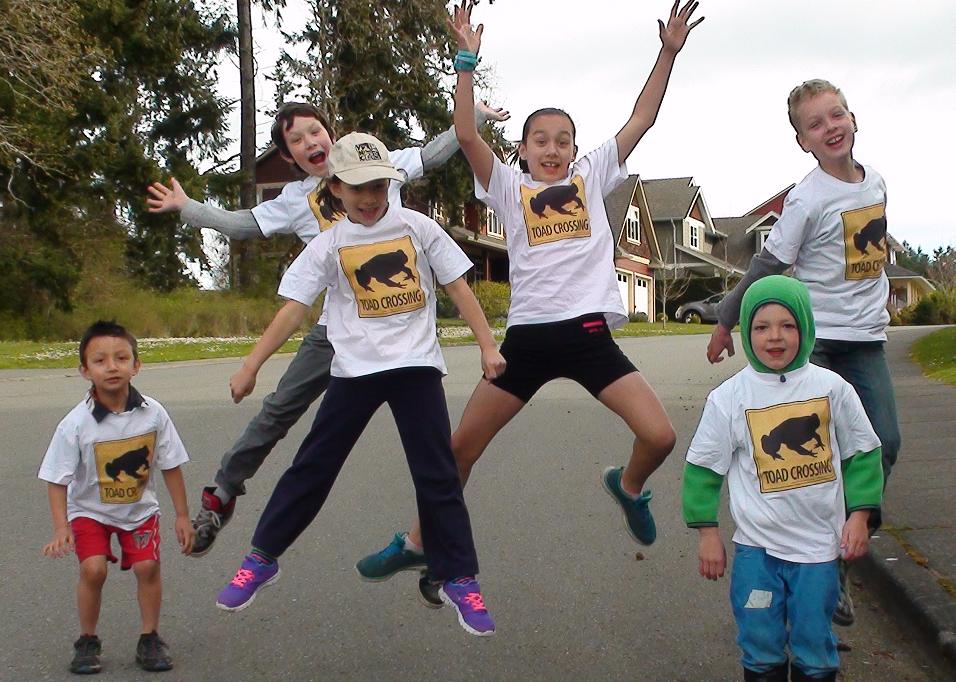
You can also help by making your home amphibian friendly! This includes:
• Avoid using pesticides and rodenticides.
• Make sure ponds and other water features have enough cover and things to help amphibians to get in and out of the water (like logs and rocks).
• Check for amphibians before large digging or construction projects (remember some hibernate underground).
Resources
A series of training videos have been created in order to explain the road survey and show techniques and materials required to conduct your own:
- Part I – Introduction
- Part II – Preparing for a Road Survey
- Part III – Conducting a Road Survey
Contact NatureKids BC at coordinator@naturekidsbc.ca to learn more or to conduct your own road survey.